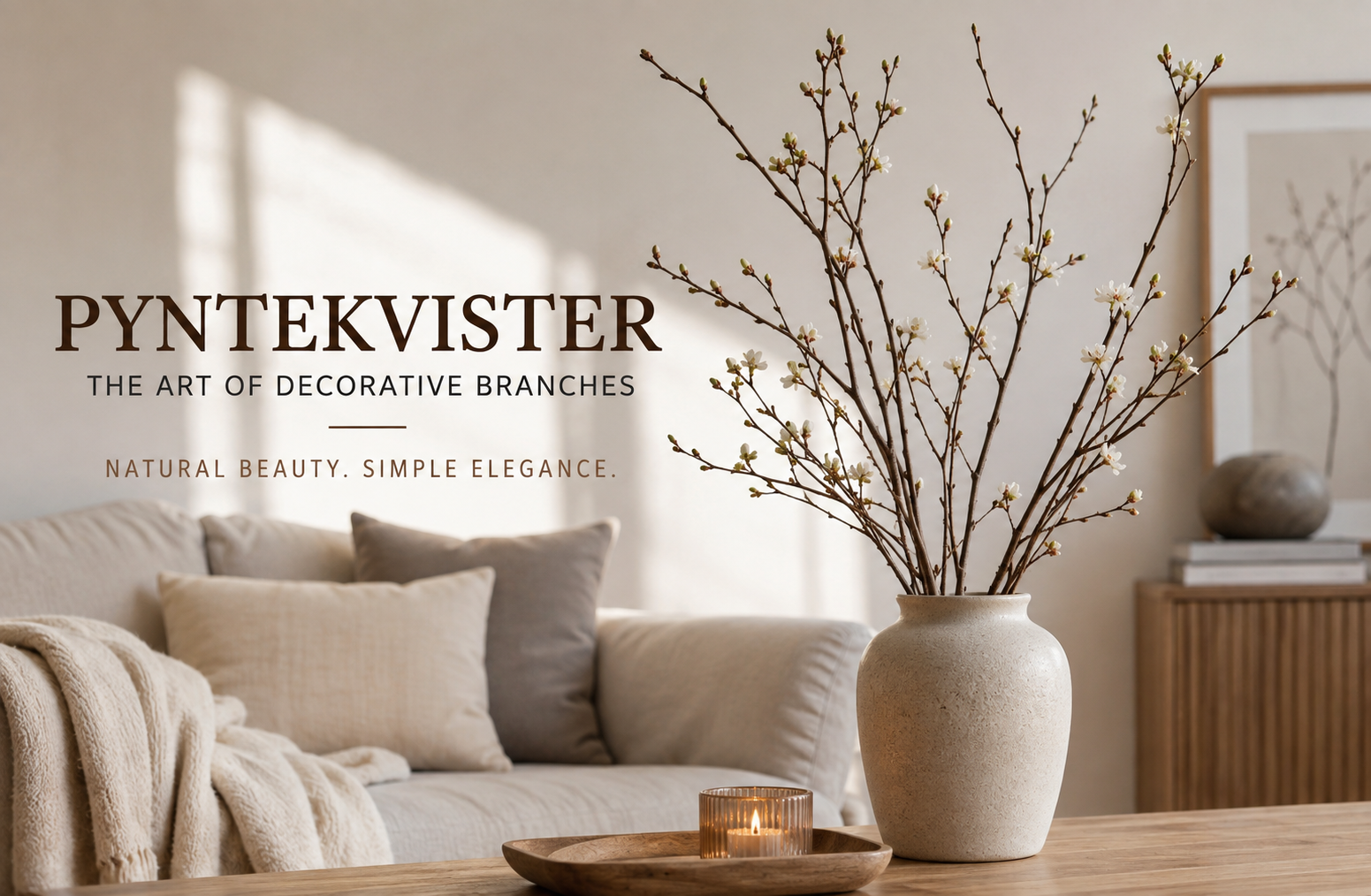
Pyntekvister: A Complete Guide to Natural Decor
Pyntekvister is a simple yet distinctive approach to home decoration that uses carefully selected branches, twigs, and natural forms to add structure, texture, height, and visual interest to an interior. Instead of relying on crowded arrangements or expensive decorative pieces, this style works with the natural shape of branches to create a calmer and more intentional space.
The appeal is easy to understand. A few well-chosen branches in a suitable vase can fill an empty corner, frame a dining table, soften a modern room, or introduce a seasonal element without overwhelming the rest of the interior. The idea also fits naturally with minimalist, rustic, Scandinavian-inspired, contemporary, and organic decorating styles.
For anyone discovering the term for the first time, there is an important point to understand: this is not necessarily a specific product, brand, plant species, or complicated decorating technique. The word is commonly used in home decor discussions to describe decorative branches or twigs arranged for aesthetic purposes.
What Is Pyntekvister?
Pyntekvister refers to decorative branches or twigs selected and arranged primarily for their appearance. They can be natural, dried, preserved, flowering, painted, or commercially produced as artificial decorative branches.
The Norwegian word is commonly explained through two parts: “pynte,” associated with decorating or adorning, and “kvister,” referring to twigs or branches. In practical home decor terms, the concept is therefore centered on using branches as intentional decorative elements.
What makes the idea interesting is its flexibility. There is no single correct branch, vase, room, or arrangement.
You might see:
- Bare branches in a ceramic vase
- Dried willow branches in a floor-standing container
- Flowering branches used as a seasonal centerpiece
- Curved twigs arranged on a console table
- Artificial branches used where natural materials are impractical
- Branches decorated with lights or small ornaments
- Minimal arrangements containing only two or three stems
The common feature is intentionality. The branches are chosen because their shape, height, texture, or color contributes something to the room.
This is also why simply collecting random sticks and placing them in a container does not always produce a convincing result. Good arrangements depend on proportion, balance, scale, and the relationship between the branches and their surroundings.
Why Pyntekvister Works So Well in Modern Interiors
Modern interiors often have large areas of clean surfaces. Smooth walls, simple furniture, neutral colors, and uncluttered shelves create a sophisticated appearance, but they can sometimes feel visually flat.
Natural branches solve part of that problem.
Their irregular shapes introduce something that manufactured furniture often lacks: organic variation. One branch may curve slightly to the left while another rises vertically. Small buds, bark textures, knots, and uneven surfaces create visual details without requiring additional decorative objects.
This makes decorative branches particularly useful when a room needs interest but does not need more clutter.
They Add Height Without Heavy Visual Weight
Height is one of the most useful tools in interior styling.
A low table with a short decorative object may look attractive, but a tall arrangement can draw the eye upward and make the room feel more balanced. This is especially useful in rooms with:
- High ceilings
- Large blank walls
- Tall windows
- Open-plan layouts
- Empty corners
- Large furniture pieces
A tall vase containing several long branches can create vertical movement without occupying the same physical footprint as a large cabinet or plant.
They Introduce Organic Texture
Texture is often overlooked when people focus mainly on color.
A neutral room can still look rich when it combines different surfaces. Wood, linen, ceramic, glass, metal, stone, and natural branches each reflect light and interact with the eye differently.
Branches add another layer.
Rough bark can contrast with smooth ceramic. Thin twigs can balance a heavy wooden table. Curved stems can soften furniture with strong straight lines.
The result is often more sophisticated than simply adding another decorative object.
They Can Work Across Different Design Styles
One of the strongest advantages of this approach is adaptability.
A natural branch arrangement can suit:
Minimalist interiors: Keep the arrangement sparse and use a simple neutral vase.
Rustic interiors: Pair rough branches with wood, stone, woven materials, and earthy colors.
Modern interiors: Choose sculptural branches with dramatic shapes and place them in a clean geometric container.
Scandinavian-inspired interiors: Use restrained arrangements with natural materials and plenty of surrounding space.
Bohemian interiors: Combine branches with textiles, pottery, baskets, and other organic materials.
Traditional interiors: Use flowering or fuller branches in a classic ceramic or glass vase.
The branches do not have to define the entire room. They simply need to support the visual language already present.
Choosing the Right Branches
Choosing the right material is more important than many beginners realize.
A beautiful arrangement starts with good raw material. If the branches are weak, damaged, excessively messy, or badly proportioned, even an expensive vase will not completely fix the composition.
Start by considering the room.
Birch Branches
Birch branches are popular for their relatively light appearance and distinctive bark. Their pale surface can work particularly well in neutral rooms.
They are suitable for:
- Minimalist arrangements
- Winter-inspired displays
- Light-colored interiors
- Tall floor vases
- Simple entryway decoration
Willow Branches
Willow can provide interesting curves and movement.
Curved branches are particularly valuable when a room contains many straight lines. They create a more relaxed silhouette and can become a focal point without requiring bright colors.
Flowering Branches
Flowering branches introduce color and seasonal character.
They can be useful when you want the arrangement to feel more lively rather than purely sculptural. Depending on the branch, the display may change considerably as flowers open.
This makes flowering branches especially attractive for seasonal decorating.
Dried Branches
Dried branches are practical because they can often remain attractive for a long period with minimal maintenance.
Their muted appearance works well with:
- Beige interiors
- Cream walls
- Natural wood
- Woven furniture
- Neutral textiles
- Earth-tone palettes
However, dried material can become brittle. It should be handled carefully when moved or rearranged.
Artificial Branches
Artificial options can make sense when durability and consistency matter more than natural variation.
They can be particularly useful in:
- Commercial spaces
- Rental properties
- Rooms without suitable natural conditions
- Homes where regular maintenance is difficult
- Seasonal displays that need to remain unchanged
The key is choosing realistic materials. Poor-quality artificial branches can look noticeably synthetic, while good ones can provide a convincing decorative effect.
How to Select the Correct Size
One of the most common decorating mistakes is choosing an arrangement that is too small for the furniture or room.
Imagine a large dining table with a tiny vase containing two short twigs. The vase may be attractive, but the overall composition can appear insignificant.
Scale matters.
A useful starting point is to consider the relationship between the container, branches, furniture, and ceiling height.
For a large room, taller branches can create enough visual presence to hold their own against larger furniture.
For a small room, a compact arrangement may be more appropriate because an oversized display can make the space feel crowded.
The goal is not to make the branches as large as possible. The goal is to make them proportionate.
How to Arrange Pyntekvister Without Making Them Look Messy
Arrangement is where the concept becomes more than simply placing branches in a vase.
Start with the silhouette.
Before worrying about small details, look at the overall shape from several angles.
Ask:
- Does the arrangement lean too heavily to one side?
- Is there enough negative space between branches?
- Are all the stems exactly the same height?
- Does the arrangement overwhelm the vase?
- Does the shape complement the furniture?
- Can the branches be seen clearly from the main viewing position?
Perfect symmetry is not always necessary.
In fact, a completely symmetrical arrangement can sometimes look artificial. Slight differences in height and direction often make a natural arrangement feel more relaxed.
Step 1: Choose the Container
The vase is not just a holder. It is part of the composition.
A narrow vase can work well for a smaller number of branches. A wider container may provide more stability for a large arrangement.
Consider both appearance and function.
Tall branches need a container with enough weight and stability to prevent tipping. If the vase is too light, the entire arrangement may become frustrating to maintain.
Step 2: Start With the Largest Branches
Place the longest or most visually dominant branches first.
These establish the basic shape.
Do not immediately fill every empty space. Step back and examine the arrangement from several directions.
Step 3: Add Supporting Branches
Once the primary structure looks balanced, add smaller branches where necessary.
The purpose is not to make the vase look full.
The purpose is to improve the silhouette.
This distinction is important. Overfilling can destroy the visual simplicity that makes this decorating style attractive.
Step 4: Leave Some Empty Space
Negative space is part of the design.
The gaps between branches allow individual shapes to remain visible. Without those gaps, the arrangement becomes a dense mass.
If you find yourself repeatedly adding branches because the vase “looks empty,” pause before doing so. Empty space may actually be doing useful visual work.
Where to Use Decorative Branches
There are many places where this approach can work, but some locations are especially effective.
Living Room
The living room is one of the easiest places to introduce a branch arrangement.
Consider:
- A side table
- A console behind the sofa
- An empty corner
- A fireplace mantel
- A media cabinet
- A coffee table
For a floor arrangement, use a tall container that creates enough presence without blocking walkways.
Dining Room
A dining table needs decoration that looks good from different angles.
A low arrangement can be useful when people need to see across the table. A taller arrangement can work when it is positioned where it will not interfere with conversation.
For everyday dining, restrained arrangements are often more practical than elaborate displays.
Entryway
The entryway is an excellent place for a vertical arrangement because it often contains narrow furniture and unused wall height.
A tall vase placed on a console can create an immediate focal point.
It also allows you to introduce seasonal changes without replacing the furniture itself.
Bedroom
In bedrooms, restraint is usually more effective.
A few thin branches in a simple vase can add character without making the room feel busy.
Place them where they do not interfere with movement, cleaning, or bedside use.
Home Office
A branch arrangement can soften the hard visual appearance of desks, screens, shelves, and office equipment.
The objective is not to turn the workspace into a garden. One carefully selected natural element may be enough.
Seasonal Decorating With Pyntekvister
One reason this decorating approach remains useful throughout the year is that branches can change with the season.
Spring
Spring arrangements can focus on fresh growth and flowering branches.
Use lighter containers and avoid adding too many additional decorative pieces. Let the branches provide most of the seasonal character.
Summer
Summer arrangements can be lighter and more relaxed.
Green foliage, delicate stems, or simple natural branches can work well when paired with lighter fabrics and brighter rooms.
Autumn
Autumn provides opportunities to introduce warmer textures and colors.
Branches can be paired with:
- Dried leaves
- Neutral ceramics
- Warm textiles
- Natural wood
- Subtle seasonal ornaments
The best result usually comes from restraint rather than filling every surface with seasonal objects.
Winter
Bare branches can look particularly effective in winter.
Their structure becomes more visible when leaves are absent. This can create a sculptural effect that works well with candles, warm lighting, and heavier textiles.
Pyntekvister as a Budget-Friendly Decorating Tool
One of the most practical advantages of this concept is that decoration does not always require expensive purchases.
Depending on local rules and the source, suitable fallen or naturally available branches may sometimes be collected responsibly. However, people should avoid damaging living trees, entering restricted land, or removing protected vegetation.
Store-bought branches are another option.
The important point is that the decorative impact comes from shape and arrangement, not necessarily from price.
This makes branches particularly useful for people who want to refresh a room without replacing furniture.
A simple vase and a carefully selected arrangement can change the visual balance of a room considerably.
Common Mistakes to Avoid
Although the concept is simple, several mistakes can make the result look unfinished.
Using Too Many Branches
More is not always better.
When branches overlap excessively, the arrangement loses clarity.
Start with fewer pieces and add only when there is a clear reason.
Ignoring the Vase
A beautiful branch arrangement in an unsuitable vase can still look wrong.
The container should support the branches visually and physically.
Choosing the Wrong Height
Branches that are too short can disappear against the furniture.
Branches that are excessively tall can become unstable or dominate the room.
Think about the complete composition rather than choosing branches independently.
Creating Accidental Symmetry
Branches from nature rarely grow in perfect symmetry.
If every stem is positioned at an identical angle, the arrangement can look overly constructed.
Allow some variation.
Ignoring Maintenance
Natural materials still require care.
Dust can accumulate on dry surfaces, delicate branches can break, and fresh branches can change over time.
A beautiful arrangement should also be practical to maintain.
Caring for Natural Branch Arrangements
Maintenance depends on the type of branch.
For dry branches, gentle dusting can help maintain their appearance. Avoid aggressive cleaning methods that may remove bark or damage fragile surfaces.
Fresh branches require more attention.
If they are being displayed in water, the container should be kept clean and the water changed as appropriate for the material. Branches should also be monitored for unpleasant odors, decay, or visible deterioration.
Humidity matters too.
Do not assume that a decorative branch arrangement can improve indoor air quality simply because it is natural. Indoor air quality depends on many factors, including pollution sources, ventilation, moisture, and filtration. The U.S. Environmental Protection Agency recommends source control, adequate ventilation, and appropriate filtration as practical strategies for improving indoor air quality. EPA guidance on indoor air quality
This distinction is important because decorative branches should be treated as decor, not as an air-cleaning device.
Is Pyntekvister Sustainable?
The answer depends on how the branches are sourced, treated, transported, and eventually disposed of.
Natural materials can have advantages, particularly when branches are responsibly sourced and used for a long period.
However, “natural” does not automatically mean environmentally harmless.
For example, buying heavily processed decorative branches that are transported long distances and replaced frequently may have a different environmental impact from using responsibly collected local material.
A more practical approach is to think about the complete lifecycle.
Choose materials that:
- Are responsibly sourced
- Can be reused
- Do not require unnecessary packaging
- Are durable enough for repeated use
- Can eventually be disposed of appropriately
- Do not involve damaging living plants or protected vegetation
Sustainability is therefore less about finding one perfect material and more about making thoughtful choices.
Natural Branches vs Artificial Decorative Branches
Both options have legitimate uses.
Natural branches provide authentic texture, irregularity, and variation. No two pieces are exactly alike.
Artificial branches provide consistency and convenience.
The better choice depends on your priorities.
Choose natural branches when you value:
- Authentic texture
- Organic variation
- Seasonal change
- Natural materials
- A more rustic appearance
Choose artificial branches when you value:
- Long-term consistency
- Minimal maintenance
- Predictable appearance
- Repeated seasonal use
- Commercial durability
There is no universal winner.
A well-designed artificial arrangement can be more practical than a natural one in a busy commercial environment. Likewise, natural branches may be the better choice when authenticity is the main design objective.
Using Pyntekvister in Small Homes
Small rooms require more attention to scale.
Instead of using several decorative objects, consider one strong vertical arrangement.
A tall but visually light branch display can occupy unused vertical space without consuming much floor area.
For a small apartment, consider placing branches on:
- A narrow console
- A small side table
- A wall-mounted shelf
- A compact dining surface
- An unused corner
Avoid arrangements that extend too far horizontally into walking areas.
The best small-space decoration often works upward rather than outward.
Using Branches as a Focal Point
A focal point is an area that naturally attracts attention.
Branches can become focal points because their irregular silhouettes stand out against plain walls.
To make the effect stronger, simplify the surrounding area.
For example, instead of placing a branch arrangement among ten other decorative objects, give it space.
This creates visual hierarchy.
The eye sees the branches first, then moves toward other details in the room.
This is one of the most useful principles for anyone trying to achieve a sophisticated interior without purchasing more furniture.
How to Combine Branches With Other Materials
Natural branches can work particularly well when combined with contrasting textures.
Ceramic
Ceramic creates a strong contrast between organic branches and a solid, crafted surface.
Glass
Glass produces a lighter visual effect and allows the stems to remain visible.
Wood
Wood creates a cohesive natural palette. However, too much wood can make a room feel visually heavy, so consider introducing lighter textiles or ceramics for balance.
Metal
Metal can provide a modern contrast.
Black metal with natural branches, for example, can create a more architectural appearance.
Textiles
Linen, cotton, wool, and woven materials can soften the harder shapes of branches.
The key principle is contrast. Similar materials can create harmony, while different textures create visual interest.
DIY Pyntekvister Ideas
You do not need advanced crafting skills to experiment with decorative branches.
One simple approach is to create a seasonal arrangement using naturally fallen branches.
Clean them gently, allow them to dry properly when necessary, and inspect them before bringing them indoors.
Another approach is to alter the appearance with removable decorations.
Depending on the season, branches can be paired with:
- Small paper ornaments
- Fabric ribbons
- Lightweight lights
- Seasonal shapes
- Minimal hanging decorations
The branch should remain the main visual element.
If decorations become more noticeable than the branches themselves, the arrangement has moved away from its original minimalist character.
How to Make the Arrangement Look More Expensive
Expensive-looking decor is often less about the actual price and more about proportion and restraint.
Three principles make a major difference.
First, choose quality over quantity.
One attractive branch can be more effective than a large collection of poor-quality stems.
Second, control the color palette.
Natural brown, beige, white, muted green, black, and soft neutral colors generally integrate easily with many interiors.
Third, create breathing room.
Do not surround the arrangement with unnecessary objects.
A simple composition can appear more sophisticated because the viewer can clearly understand what the focal element is.
Real-World Applications Beyond the Home
Although home decoration is the most obvious application, decorative branches can also work in commercial and public environments.
Restaurants can use them as table or entrance decoration.
Hotels can use larger arrangements in reception areas.
Retail stores can incorporate branches into seasonal displays.
Offices can use them to soften reception desks and common areas.
Event planners can use branches for weddings, dinners, seasonal events, and themed installations.
The same basic design principles apply: scale, stability, visual hierarchy, texture, and appropriate placement.
Commercial settings also require additional practical considerations, such as fire safety, accessibility, cleaning schedules, and the possibility of branches obstructing walkways or equipment.
A Practical Method for Designing Your Own Arrangement
If you are starting from zero, use this simple process.
1. Study the Room
Look at the colors, furniture, lighting, and empty spaces.
Do not choose branches before deciding where they will go.
2. Identify the Purpose
Ask what problem the arrangement should solve.
- Does the room need height?
- Does a corner feel empty?
- Does a table need a centerpiece?
- Does a modern interior need more texture?
3. Select the Container
Choose a vase or container that fits the furniture and the available space.
4. Choose the Dominant Branch
Find one branch with an attractive shape.
This becomes the structural foundation.
5. Add Supporting Stems
Add smaller branches only when they improve the composition.
6. Step Back
View the arrangement from several meters away.
What looks balanced from close range can look completely different across the room.
7. Remove Something
This is one of the most useful final steps.
If the arrangement feels crowded, remove one or two branches.
Minimal design often improves when something is taken away.
Frequently Asked Questions About Pyntekvister
What does pyntekvister mean?
Pyntekvister is commonly used to describe decorative branches or twigs arranged for interior decoration. The term is associated with Scandinavian and Nordic-style decor.
Are pyntekvister real branches?
They can be. Natural, dried, preserved, flowering, painted, and artificial branches may all be used for this type of decoration.
Where should decorative branches be placed?
Popular locations include living rooms, entryways, dining rooms, bedrooms, home offices, shelves, consoles, and empty corners.
Are decorative branches difficult to maintain?
Dried branches generally require little maintenance beyond occasional dusting and careful handling. Fresh branches need more attention, particularly when displayed in water.
Can pyntekvister work in a modern home?
Yes. Their organic shapes can soften modern interiors and introduce texture without requiring a large amount of additional decoration.
Are decorative branches environmentally friendly?
They can be, especially when responsibly sourced, reused, and appropriately disposed of. However, natural does not automatically mean sustainable, so sourcing and lifecycle should be considered.
Conclusion
Pyntekvister demonstrates how a very simple natural element can have a surprisingly strong effect on interior design. Decorative branches can add height, texture, movement, seasonal character, and visual balance without requiring a room to become crowded with accessories.
The most successful arrangements are rarely the most complicated. They depend on selecting suitable branches, choosing a container with the right scale, allowing enough negative space, and understanding how the arrangement interacts with furniture and architecture.
The approach also works because it is flexible. Natural branches can suit minimalist interiors, rustic rooms, modern apartments, traditional homes, offices, restaurants, and seasonal displays. They can be inexpensive or professionally sourced, natural or artificial, subtle or dramatic.
The most useful principle is simple: treat the branch as part of the design rather than as something that merely fills an empty vase. Consider its shape, height, texture, direction, and relationship with the surrounding space. When those elements are balanced, even a small arrangement can make an interior feel more deliberate and complete.